A service of Network Integration Specialists
The tasks that eat your week, running without you.
We build and manage automations across the systems you already use — your email, your accounting, your file server — then monitor and maintain them as things change. Repetitive work runs in the background, giving your team more time for the work that needs their judgment, experience, and talent.
One free hour to find the right place to start. Bring a workflow, a frustration, or a goal. You leave with a concise implementation plan and a clear recommendation for what comes next.
Automation Build Sessions and AI Productivity Workshops. Practical one-on-one help, one focused hour at a time.
Rather not book a slot? Email [email protected] and we’ll reply with times.
- Inbox triageMessages sorted, exceptions flagged for a humanDone
- New-hire provisioningMailbox, drive and phone created from one requestDone
- Daily sales reportBuilt from several systems and sent on scheduleDone
- Invoice matchingMatched against orders, mismatches queuedNeeds a look
- Backup verificationChecked against last night rather than assumedDone
- Quote follow-upReminders queued so none are missedDone
- Vendor bill importRead from email or PDF and coded to the right jobDone
- Overnight sync checkTwo systems compared until they agreeDone
Examples of tasks an Ops Organizer automation can be designed to handle. Actual reporting depends on the workflow.
When we manage an automation, we monitor what ran, whether it succeeded, and what needs attention.
Free, instant, no account needed
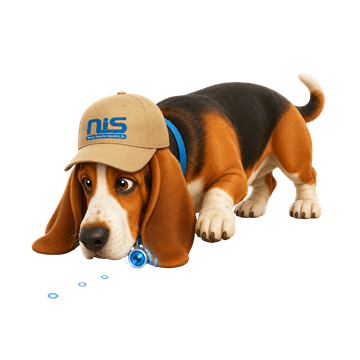
Meet Webster. He’s here to sniff out any problems.
Webster checks what the internet can already see about your domain — whether a stranger can send email in your name, and how many days are left on the registration everything depends on. Most small businesses have never looked. It takes him about a second.
- Can strangers send email as you
- Is your domain about to expire
- Is it locked against transfer
- Is your certificate healthy
- Is your website software out of date
Webster reads public records — the domain registry, the DNS system, and the security certificate your site already presents to every visitor — and loads your home page once, exactly as a visitor’s browser does. He does not go looking through the rest of your site, does not log in to anything, and does not keep the results. Checking someone else’s website without their permission is not something we will do, so this stops where that starts.
We keep your email address so we can follow up about what Webster finds. We do not sell it, and we do not add you to a mailing list. Privacy policy.
One-on-one working sessions
One focused hour. Two ways to move work forward.
Book only the time you need. Each session is focused on real work inside the systems and platforms you already use.
Featured service
Automation Build Session
$175per one-hour session
Bring a workflow. We document how it works today, then build, test, and refine the automation in paid one-hour blocks. Join the build live, or authorize us to work during your reserved time and review the progress with you.
- The first session produces the detailed runbook documenting your current manual workflow.
- Later sessions build, test, and refine the automation itself.
- Participate live, or let us work independently during the reserved hour.
- Customer-specific source code becomes yours once it has been paid for.
Hands-on AI coaching
AI Productivity Workshop
$150per one-hour session
Share your screen and work inside your own AI platform. Bring a real task and learn more efficient ways to prompt, analyze, organize, and reuse what works.
Hands-on help with ChatGPT, Claude, Gemini, Microsoft Copilot, Grok, or the AI platform your business already uses.
- Strictly one-on-one, on your own AI account.
- You stay in control and share your screen. We never need or receive your AI credentials.
- Practical coaching rather than an automation build — no specific deliverable is promised.
Sessions are invoiced when booked and paid before the meeting. Not sure which path fits? Start with a free automation audit.
A message from Doug White
Automations don’t have to be big to have impact.
This started inside my own business.
I have owned Network Integration Specialists for 26 years and spent 32 years supporting the technology businesses depend on. For the last three years, I have been automating NIS from the inside, one repetitive process at a time.
That work taught me that automation does not need to be a massive project to matter. Taking a 30-minute daily task off someone’s plate, reducing mistakes in a routine process, or giving an employee an hour back each week can produce a real return.
Ops Organizer grew from that practical experience. We start with real work, prove that the automation helps, and build from there.
Doug White
Network Integration Specialists, Inc.
How it works
You pay to build it once, then to keep it running.
Every automation starts with the workflow on paper. This example follows one appointment being rescheduled, with every branch and failure mapped before a line is built.
Build
One-time, quoted per automation- The free audit produces a concise implementation plan.
- The first paid build session produces a runbook documenting the current manual workflow.
- Required tenant, server, connections, and platform setup are included in the build quote.
- The automation is built across the systems you already use.
- It is tested against agreed outcomes before the manual process is retired — in parallel where practical, and in a safe test environment when it is not.
- Activity logging and a documented manual fallback are included.
- Customer-specific source code becomes your property once the build is paid in full.
Calendar change detected
Trigger
A meeting is moved or canceled in the shared calendar
Read OKRead failed
Already booked downstream?
Condition
Condition metCondition not met
Calendar unreachable
End
Failed — don't retry
Create the new slot
Action
Write the appointment into the scheduling system
CreatedCreate failed
Move the existing slot
Action
Update the appointment already on the books
UpdatedUpdate failed
Notify everyone affected
Action
Email the customer and the assigned staff member
Notice sentNotice failed
Create failed
End
Flagged for a human
Attendees notified
End
Success
Move failed — queued for review
End
Failed
Change confirmed
End
Success
Notice not sent — flagged
End
Failed
Run
Monthly platform fee plus monitoring per automation- Monitoring runs continuously.
- Failures are flagged automatically, then investigated and corrected during normal business hours.
- Routine maintenance and moderate vendor API changes are included.
- An optional read-only dashboard provides 30 days of activity and error history.
- The runbook is updated when NIS makes managed changes.
Major vendor, software, or workflow changes that require a rebuild are scoped and quoted separately.
Before work begins, you receive the build price and expected monthly service cost. One platform fee covers the managed infrastructure, backups, dashboard, and included usage. Monitoring is priced per automation, not per user. If NIS already manages your IT, the monthly service can be added to your existing agreement.
Security and access
Your systems, your accounts, your control.
Automations connect to systems that contain important business data. That access should be limited, visible, and easy to revoke. Here is how we protect it.
Every customer is isolated
Each customer runs in a dedicated environment. Compute, credentials, tunnels, and access policies are never shared between tenants.
Credentials stay with the tenant
When NIS hosts the environment, credentials remain on your dedicated server. When you host locally, credentials remain local. Mission Control does not store them.
Only the access the workflow needs
Customer-owned service accounts are scoped to each workflow and remain read-only unless the automation must make a change. Write access is documented and approved before deployment.
Monitoring without centralizing business data
Mission Control receives health and usage information, not API keys, request values, or result data. Detailed errors remain on the tenant server and are read only when troubleshooting requires them.
If the managed service ends, NIS access is removed and the managed platform services stop. You keep your implementation plan, runbook, vendor accounts, and any customer-specific source code. Shared Ops Organizer platform components do not transfer.
Mission Control
Your managed environment, visible in one place.
NIS uses Mission Control to monitor connection health, activity, and errors for your managed environment. You never need to watch it yourself because monitoring and maintenance are handled for you. If you want visibility, an optional read-only view gives you access to the same tenant-specific information we see, including 30 days of activity and error history.

CONNECTIONS 6
microsoft-365
ONLINE
412 calls
quickbooks
ONLINE
306 calls
sharepoint
ONLINE
188 calls
google-workspace
ONLINE
154 calls
dropbox
ONLINE
132 calls
slack
ONLINE
92 calls
LIVE ACTIVITY
- 14:22:08match_invoicesquickbooks412ms
- 14:21:54provision_mailboxmicrosoft-3651284ms
- 14:19:31file_signed_documentsharepoint96ms
- 14:18:02send_daily_reportgoogle-workspace143ms
- 14:16:47verify_backupdropbox221ms
RESPONSE TIME · 24H
HOST RESOURCES
| Time | Server | Tool | Result | Latency | Argument keys |
|---|---|---|---|---|---|
| Mar 04 · 14:22 | quickbooks | match_invoices | success | 412ms | invoice_id, vendor_id |
| Mar 04 · 14:21 | microsoft-365 | provision_mailbox | success | 1284ms | upn, license_sku |
| Mar 04 · 14:19 | sharepoint | file_signed_document | success | 96ms | site_id, folder_path |
| Mar 03 · 09:41 | google-workspace | send_daily_report | failure | 30s | recipient_group, report_date |
| Mar 03 · 09:12 | dropbox | verify_backup | success | 221ms | folder_id |
Argument key names are recorded so a run can be traced. Values, results and credentials are not — they stay on the tenant server.
BY ENDPOINT · 30D
- graph.microsoft.com3
- www.googleapis.com2
- api.dropboxapi.com1
BY CLASS · 30D
- Caller error (4xx)4
- Platform error (5xx)2
BY TOOL · 30D
- send_daily_report3
- provision_mailbox2
- verify_backup1
- Mar 03 · 09:41send_daily_reportgoogle-workspace429 · callerRate limited by provider — retried and succeeded on the next attempt.
- Feb 27 · 02:15provision_mailboxmicrosoft-365503 · platformUpstream service unavailable during a vendor maintenance window.
- Feb 19 · 22:04verify_backupdropbox401 · callerService account token expired — re-authorized, no data affected.
Counts and summaries are what Mission Control holds. Detailed errors remain on the tenant server and are read only when troubleshooting requires them.
Find the first task worth taking off your team’s plate.
Start with a free one-hour automation audit. You will leave with a concise implementation plan and a clear recommendation for what comes next.
Book a free automation audit